



A birthday party can get awkward when half the guests have never met. A Christmas gathering can lose energy after dinner. And at a family celebration, it sometimes takes only a few quiet minutes before everyone reaches for a phone. That is where fun party games earn their place. The right game gives people something easy to do together, whether that means drawing terrible pictures, chasing clues, answering ridiculous questions, or competing over a roll of the dice.
The key is choosing activities that fit your guests rather than forcing everyone into the same type of entertainment. Below are 20 easy-to-understand ideas for children, adults, families, Christmas gatherings, birthdays, graduation celebrations, and mixed-age groups—plus practical tips for choosing games that actually work for your party.
What Are the Best Fun Party Games for Every Occasion?
Some of the most versatile fun party games include Charades, Pictionary, Musical Chairs, Two Truths and a Lie, Treasure Hunts, Minute-to-Win-It challenges, and dice games. The best choice depends on the guests’ ages, group size, available space, and how active or competitive people want to be.
Fun Party Games That Everyone Can Enjoy
These classics are useful when you need easy party games at home without complicated rules or expensive equipment.
1. Charades — Turn Simple Clues Into Big Laughs
Best For: Teens, adults, families, mixed groups
Players: 4 or more
Materials Needed: Paper slips and a bowl, or a prepared clue list
How to Play: Divide everyone into teams. One player silently acts out a word, movie, person, activity, or phrase while teammates try to guess it before time runs out.
Why It’s Fun: The entertainment often comes from wildly inaccurate guesses and creative acting.
Hosting Tip: Use familiar clues if children and adults are playing together.
2. Pictionary — Draw It Before They Guess It
Best For: Ages 8+, families, casual parties
Players: 4 or more
Materials Needed: Paper or whiteboard, markers, word prompts
How to Play: A player draws the assigned word without speaking, writing letters, or spelling it out. Their team tries to identify the answer within a set time.
Why It’s Fun: Artistic ability barely matters. In fact, questionable drawings often make the game better.
3. Musical Chairs — A High-Energy Classic
Best For: Children and active family gatherings
Players: 5 or more
Materials Needed: Chairs and music
How to Play: Set up the chairs so there is one less chair than the total number of players.
Everyone walks around the chairs while music plays and tries to sit when it stops. Remove another chair after each round.
Why It’s Fun: Every music stop creates instant suspense.
Hosting Tip: Keep the walking area clear and discourage pushing or running.
4. Two Truths and a Lie — An Easy Party Icebreaker
Best For: Teens, adults, guests meeting for the first time
Players: 3 or more
Materials Needed: None
How to Play: Each player tells the group three things about themselves, including two facts and one made-up statement.
Everyone else guesses which statement is the lie.
Why It’s Fun: It starts conversations naturally and can reveal surprising stories about people.
Fun Christmas Party Games for Holiday Gatherings
If dinner and gift exchanges are already planned, these fun Christmas party games add interaction without requiring an elaborate setup.
5. Christmas Trivia — Test Your Holiday Knowledge
Best For: Families, coworkers, adults, teens
Players: 4 or more
Materials Needed: Holiday trivia questions, paper, pens
How to Play: Ask questions about holiday movies, songs, traditions, food, or general Christmas knowledge. Players can answer individually or in teams.
Why It’s Fun: Trivia allows quieter guests to participate without performing in front of everyone.
6. Holiday Gift-Wrap Challenge — Race the Clock
Best For: Teens and adults
Players: 4 or more
Materials Needed: Boxes, wrapping paper, tape, ribbon
How to Play: Give players identical supplies and a limited amount of time to wrap a box. Judge entries using categories such as neatest, fastest, or most creative.
Why It’s Fun: A familiar holiday chore becomes a playful competition.
Hosting Tip: Use empty boxes rather than actual presents.
7. Christmas Charades — Act Out Festive Favorites
Best For: Families and holiday parties
Players: 4 or more
Materials Needed: Christmas-themed prompts
How to Play: Use regular Charades rules, but make every clue holiday-related—such as decorating a tree, building a snowman, or a familiar seasonal movie.
Why It’s Fun: The holiday theme makes a familiar game feel specific to the celebration.
8. Guess the Christmas Song — Name That Holiday Tune
Best For: Teens, adults, families
Players: 3 or more
Materials Needed: Holiday music playlist or prepared song clues
How to Play: Play a short instrumental or opening section of a Christmas song and ask players to identify it. Award a point for each correct title.
Why It’s Fun: It combines music, memory, and friendly competition with very little preparation.
Best Birthday Party Games for Kids
The best birthday party games for kids tend to have simple instructions, short rounds, and enough activity to prevent long waits between turns.
9. Treasure Hunt — Follow the Clues
Best For: Ages 5–12
Players: 2 or more
Materials Needed: Written or picture clues and a small final surprise
How to Play: Hide clues around a safe party area. Each clue leads children to the next location until they reach the final treasure.
Why It’s Fun: Every clue creates a small mystery and gives kids a shared goal.
Hosting Tip: Use picture-based clues for younger children who are still learning to read.
10. Balloon Keep-Up — Don’t Let It Drop
Best For: Ages 4+
Players: 2 or more
Materials Needed: Balloons
How to Play: Players tap a balloon into the air and try to prevent it from touching the floor. For groups, add more balloons as the round continues.
Why It’s Fun: The rules take seconds to understand, but multiple balloons quickly create hilarious chaos.
Hosting Tip: Check for latex allergies and use an appropriate alternative when necessary.
11. Simon Says — Listen Before You Move
Best For: Ages 4–10
Players: 3 or more
Materials Needed: None
How to Play: One person gives instructions. Players should follow only commands beginning with “Simon says.” Anyone following an instruction without those words can sit out that round or simply lose a point.
Why It’s Fun: Silly instructions make a familiar listening game more entertaining.
12. Freeze Dance — Dance, Freeze, Repeat
Best For: Ages 4–12
Players: 3 or more
Materials Needed: Music and a speaker
How to Play: Everyone dances while the music plays. When it stops, players freeze immediately. Instead of eliminating children, award points for great freezes or simply restart the music.
Why It’s Fun: Everyone stays involved, making it a good birthday party activity for energetic groups.
Graduation Party Games Worth Celebrating
Good graduation party games can focus on memories and the graduate without making the celebration feel like another formal ceremony.
13. Who Knows the Graduate Best? — Personalized Trivia
Best For: Graduation parties
Players: 4 or more
Materials Needed: Prepared questions, answer sheets
How to Play: Ask questions about the graduate’s favorite things, school memories, hobbies, or future plans. Guests write down answers, and the graduate reveals the correct ones.
Why It’s Fun: Friends and relatives get to compare how well they know the guest of honor.
14. Graduation Memory Match — Match the Moment
Best For: Friends and family
Players: 4 or more
Materials Needed: Photos or written memories
How to Play: Display selected photos or memories and challenge guests to match them with a year, event, place, or story.
Why It’s Fun: The activity turns personal milestones into conversation starters.
15. Advice for the Graduate — Creative Challenge
Best For: Teens and adults
Players: Any group size
Materials Needed: Cards and pens
How to Play: Ask guests to write one useful, funny, or imaginative piece of advice. Read the cards aloud and let the graduate guess who wrote each one.
Why It’s Fun: It combines humor with meaningful messages the graduate can keep afterward.
16. Graduation Bingo — Celebrate the Milestones
Best For: Large graduation gatherings
Players: 5 or more
Materials Needed: Customized bingo cards and markers
How to Play: Fill cards with graduation-related moments or experiences instead of ordinary numbers. Players mark matching squares as prompts are called or events happen during the celebration.
Why It’s Fun: Guests can participate while talking, eating, and enjoying the party.
Family Party Games for Kids, Teens, and Adults
The strongest family party games use rules that are easy enough for younger guests while still giving teens and adults a reason to stay involved.
17. Minute-to-Win-It Challenges — 60 Seconds of Chaos
Best For: Families and large groups
Players: 2 or more
Materials Needed: Depends on the challenge
How to Play: Create simple 60-second tasks using household objects—for example, stacking cups or transferring lightweight objects between containers. Players attempt the same challenge individually or in teams.
Why It’s Fun: Short rounds keep the party moving and make it easy to rotate participants.
18. Dice Games — Roll, Decide, and Compete
Best For: Older kids, teens, adults, families
Players: Usually 2 or more
Materials Needed: Dice or a multiplayer dice game
How to Play: Choose a dice game with rules suited to your group. Many scoring games ask players to decide whether to protect—or “bank”—points already earned or keep rolling for a chance at a better score while accepting additional risk.
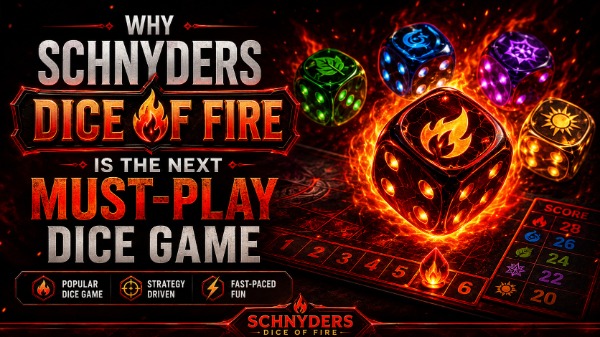
For players who enjoy that style of friendly competition, Schnyder’s Dice of Fire is a relevant multiplayer example. It supports two-player and four-player play and combines competitive scoring with decisions about banking points or continuing to roll. Leaderboards and tournaments can add another competitive dimension for players interested in ongoing challenges.
Why It’s Fun: Dice introduce uncertainty, while player decisions keep the outcome from feeling completely random.
Hosting Tip: Explain scoring with one practice turn before starting a competitive round.
If strategic multiplayer dice games sound like your group’s kind of entertainment, explore Schnyder’s Dice of Fire and learn the rules before your next game session.
19. Would You Rather? — Pick Between Two Funny Choices
Best For: Ages 8+, families, adults
Players: 3 or more
Materials Needed: None, although prepared questions help
How to Play: Ask players to choose between two hypothetical options. After everyone answers, invite volunteers to explain their choices.
Why It’s Fun: There are no complicated rules, and unexpected answers often create the best conversations.
20. Team Scavenger Hunt — Search Together to Win
Best For: Families, large groups, outdoor parties
Players: 6 or more
Materials Needed: Scavenger-hunt list
How to Play: Divide guests into teams and give each the same list of safe objects, clues, or locations to find. Set boundaries and a time limit, then compare completed lists at the end.
Why It’s Fun: It mixes teamwork, movement, observation, and problem-solving.
Hosting Tip: For indoor parties, use clues rather than hiding objects in difficult locations.
How to Choose the Fun Party Games for Your Guests
A game can be entertaining in one setting and completely wrong in another. Before choosing activities, consider who is attending and what the venue allows.
Age Group
Young children usually benefit from short instructions and quick turns. Adults may enjoy conversation, strategy, trivia, or competitive games. For mixed ages, try Charades, Pictionary, simple dice games, or team activities where different abilities can contribute.
Group Size
For four or five people, conversational games and dice games work well. With 15 or 20 guests, team-based Charades, trivia, scavenger hunts, and other games for large groups reduce waiting time.
Available Space
Don’t plan an active scavenger hunt in a cramped living room. Choose trivia, Pictionary, dice games, or Would You Rather? when space is limited. Save more active outdoor party games for yards, parks, and larger venues.
Time Available
A party does not need an hour-long tournament. Two Truths and a Lie or Would You Rather? can fill a spare 10 minutes, while scavenger hunts and competitive games work better when you can dedicate more time.
Equipment and Budget
Great entertainment does not require expensive supplies. Charades, Simon Says, Would You Rather?, and Two Truths and a Lie are essentially party games without equipment. Paper, pens, balloons, cups, and dice can cover many other activities.
Accessibility and Comfort
Not every guest wants to run, dance, act, or compete publicly. Include seated options such as trivia, Pictionary, conversation games, and dice games. Team formats can also let people participate without placing one person under constant attention.
| Party Type | Recommended Games | Preparation Level |
|---|---|---|
| Birthday Party | Treasure Hunt, Freeze Dance | Low–Medium |
| Christmas Party | Christmas Trivia, Christmas Charades | Low |
| Graduation Party | Graduate Trivia, Memory Match | Low–Medium |
| Family Gathering | Dice Games, Pictionary | Low |
| Large Group Party | Team Scavenger Hunt, Charades | Medium |
Solving Common Party Games Problems
Guests don’t know each other: Start with Two Truths and a Lie or team Pictionary. Both create conversation without requiring people to know one another beforehand.
Children are getting bored: Switch to short, active rounds such as Freeze Dance, Balloon Keep-Up, or Simon Says. You can entertain a group with inexpensive household supplies rather than buying elaborate equipment.
Your group has mixed ages: Create teams with a mixture of children, teens, and adults. Charades, scavenger hunts, Pictionary, and suitable dice games give different players opportunities to contribute.
There isn’t much space: Skip running games. Trivia, Would You Rather?, Pictionary, and seated dice games require relatively little room.
You have almost no preparation time: Choose games without equipment or create a short list of prompts on your phone before guests arrive.
Competition is becoming too serious: Use short rounds, rotate teams, recognize funny or creative achievements, and avoid making every activity about one overall winner.
Make Every Party Games More Enjoyable
Choosing the right game is important; however, the way you organize it can make an even bigger difference. First, explain the rules clearly so everyone understands how to participate. Next, divide larger groups into balanced teams when necessary. In addition, consider the ages, interests, and comfort levels of your guests before choosing highly active or competitive activities. For example, younger children may enjoy Freeze Dance, while adults might prefer trivia or multiplayer dice games. Most importantly, keep the atmosphere friendly and flexible. As a result, guests can focus less on winning and more on enjoying the celebration together.
Keep Everyone Involved in the Fun Party
Great party games should give every guest a chance to participate. Therefore, start with simple activities that help people feel comfortable with one another. Afterward, introduce more energetic or competitive games as the party becomes livelier. Meanwhile, make sure younger children and quieter guests are not left out. For instance, family party games such as Pictionary, Charades, or dice games can bring different age groups together. Furthermore, you can adjust teams and rules according to the group. Ultimately, a flexible approach keeps the celebration entertaining and helps everyone enjoy the experience.
FAQ On Fun Party Games
Good party games for adults include Charades, Pictionary, Two Truths and a Lie, trivia, Would You Rather?, Minute-to-Win-It challenges, and multiplayer dice games. Match the activity to the group: conversational games work well for relaxed gatherings, while team and scoring games suit guests who enjoy competition.
Charades, Two Truths and a Lie, Simon Says, and Would You Rather? These games can be enjoyed with minimal equipment or no equipment at all. You can also improvise trivia verbally. These choices are especially useful when you need easy party games at home with almost no preparation.
For large groups, try team Charades, Pictionary, Christmas Trivia, Graduation Bingo, or a Team Scavenger Hunt. Team formats allow many people to participate simultaneously and reduce the amount of time guests spend waiting for individual turns.
Christmas Trivia, Christmas Charades, and Guess the Christmas Song are simple and entertaining Christmas party games that require very little preparation. Trivia and Charades need only prompts, while a song-guessing game can be organized with a prepared holiday playlist.
Treasure Hunts, Balloon Keep-Up, Simon Says, and Freeze Dance are strong options because their basic rules are easy to explain. When choosing the best birthday party games for kids, consider children’s ages, the available space, supervision, and whether anyone has accessibility or allergy considerations.
Popular graduation party games can include Who Knows the Graduate Best?, Graduation Memory Match, Advice for the Graduate, and Graduation Bingo. Personalized questions, photographs, and school memories help connect the activities directly to the person being celebrated.
Pictionary, Charades, scavenger hunts, simple Minute-to-Win-It challenges, and appropriate dice games are flexible family party games. For mixed-age gatherings, consider team play so younger children can participate alongside older relatives instead of competing against them directly.
The right choice depends on whether your group prefers quick luck-based rounds or longer games involving scoring decisions. Multiplayer dice games that let players choose between banking points and continuing to roll can create additional strategy. Schnyder’s Dice of Fire is one example designed around multiplayer competitive dice play.
Conclusion On Fun Party Games
A successful party doesn’t need complicated entertainment. A few well-chosen fun party games can turn quiet moments into conversations, friendly competition, teamwork, and plenty of laughter.
For birthdays, match activities to children’s ages and energy levels. At Christmas and graduation celebrations, use themed games that connect naturally to the occasion. For family gatherings, prioritize simple rules and activities that allow different generations to participate comfortably.
Most importantly, consider your guests, available space, preparation time, and how competitive everyone wants to be.
And if your group enjoys rolling dice, weighing risks, and competing for points, take a look at Schnyder’s Dice of Fire and explore its multiplayer rules for your next game session.






One thought on “Fun Party Games for Every Occasion: 20 Ideas That Never Get Old”