
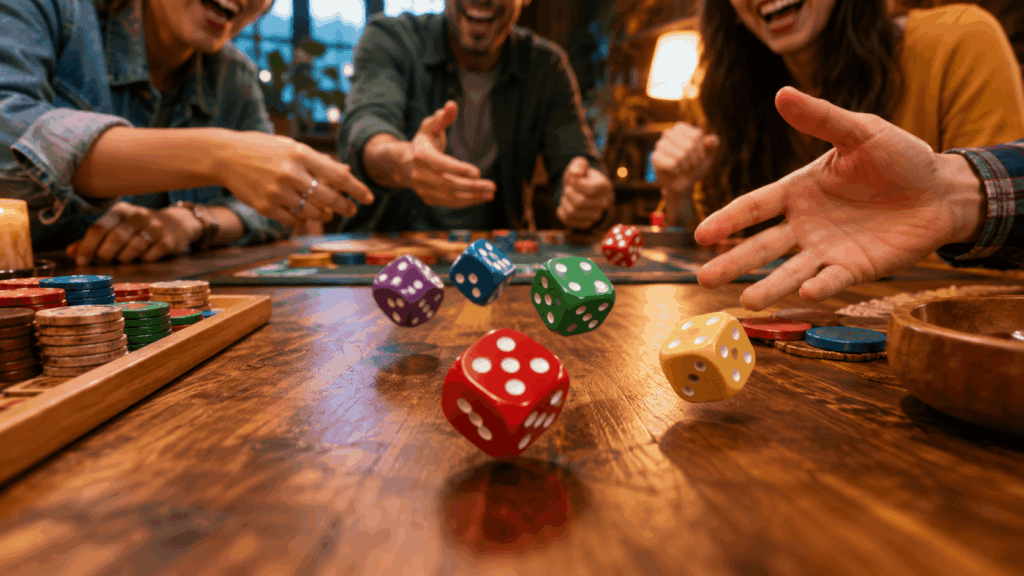
Remember those evenings when everyone gathered around a table, argued over the rules, and laughed until someone demanded a rematch? That’s the magic of good old games. They turn ordinary moments into unforgettable memories without requiring expensive equipment or complicated instructions.
Although modern gaming offers impressive graphics and technology, classic games continue to bring people together through strategy, excitement, and friendly competition.
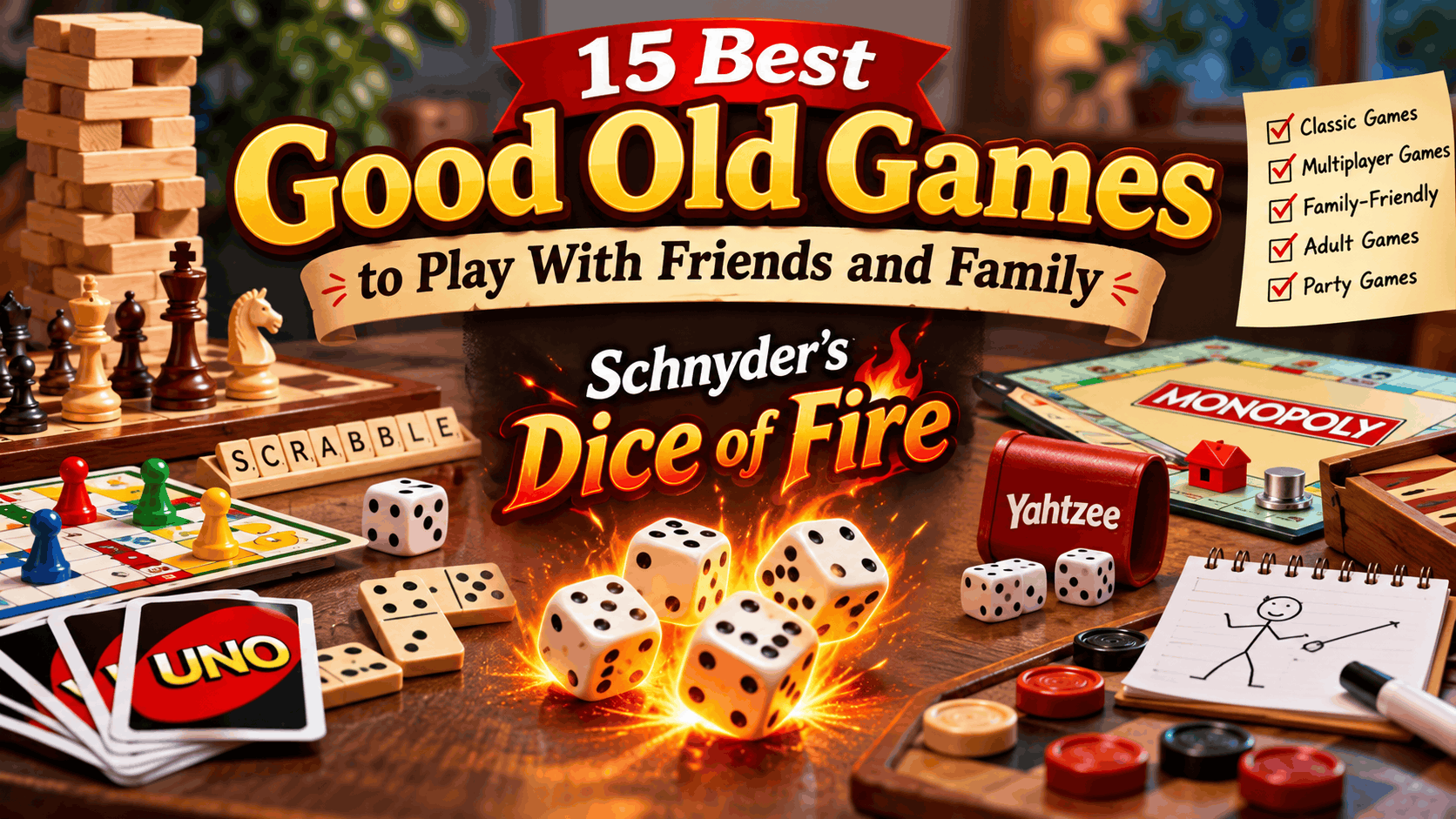
From traditional favorites like Ludo and Chess to modern multiplayer dice experiences such as Schnyder’s Dice of Fire, there’s something for every generation.
Whether you’re organizing a family gathering, planning a weekend with friends, or searching for entertaining adult games, these 15 timeless favorites deserve a place on your gaming list.
Why Are Good Old Games Still Popular?
Good old games remain popular because they combine simple rules, meaningful social interaction, and entertainment that appeals to different generations.
Unlike many complicated modern games, traditional favorites are easy to learn and often require minimal preparation.
Their lasting appeal comes from several qualities:
- Nostalgia: Familiar games bring back childhood memories and family traditions.
- Social connection: Playing together encourages conversation, laughter, and teamwork.
- Friendly competition: Even simple games can create exciting rivalries.
- Mental engagement: Strategy games encourage planning, concentration, and decision-making.
- Accessibility: Many classic games accommodate different ages and experience levels.
Most importantly, these games remind us that entertainment doesn’t always depend on advanced technology.
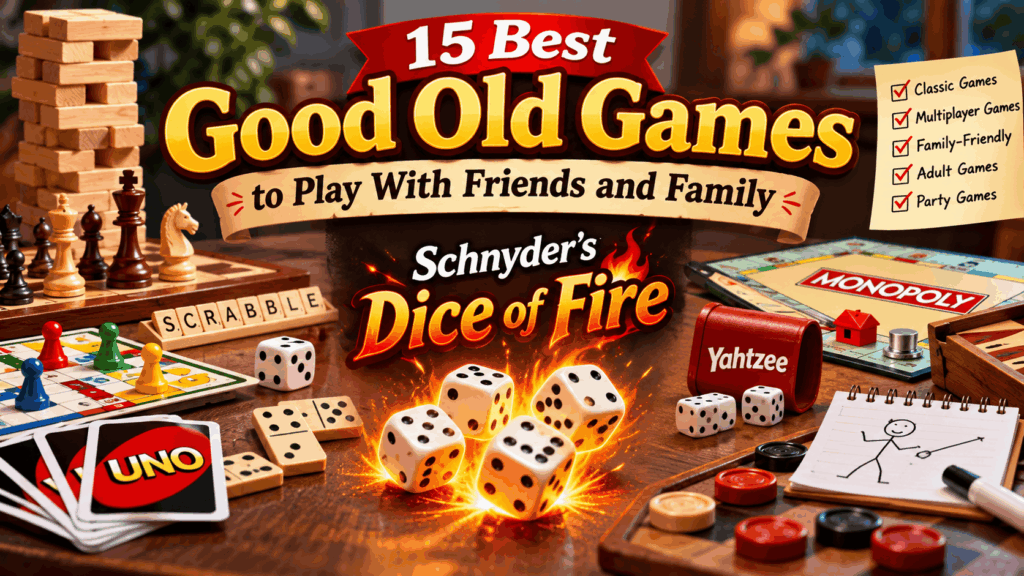
15 Best Good Old Games Worth Playing Today
1. Schnyder’s Dice of Fire – A Modern Twist on Classic Dice Games
Schnyder’s Dice of Fire brings the excitement of traditional dice games into a modern competitive experience where every roll can change the outcome.
The objective is straightforward: be the first player to reach 10,000 points, while carefully balancing risk and reward.
However, winning requires more than lucky rolls.
To enter the competition, players must score at least 1,000 points in a single turn and bank those points. After qualifying, they must decide whether to continue rolling for additional points or secure their accumulated score.
Rolling again creates opportunities to advance, but it also introduces the risk of losing unbanked points.
The game offers two-player and four-player multiplayer experiences, making it suitable for competitive sessions with friends. Its tournament and leaderboard elements add another dimension to the classic dice-playing formula.
Furthermore, reaching 10,000 points doesn’t immediately guarantee victory. Other players receive one final round, creating opportunities for dramatic comebacks.
Why it’s worth playing: Schnyder’s Dice of Fire combines familiar dice mechanics with strategic decisions and modern multiplayer competition.
Discover the excitement of competitive dice gaming by visiting the official Schnyder’s Dice of Fire website.
2. Ludo – A Timeless Family Favorite
Best for: Families and casual players
Ludo is one of those good old games that can turn a quiet afternoon into a lively competition.
Players roll dice to move their tokens around the playing area, aiming to bring all their pieces home before their opponents.
Although the rules are simple, sending another player’s token back to the starting point creates memorable rivalries.
3. Chess – The Ultimate Strategy Challenge
Best for: Two players who enjoy strategic thinking
Chess rewards patience, concentration, and careful planning.
Two opponents move pieces with different abilities, attempting to checkmate the opposing king.
Unlike luck-based dice games, chess depends on strategic decisions, making it especially appealing to players who enjoy intellectual competition.
4. Monopoly – The Classic Property Trading Game
Best for: Family gatherings and longer game nights
Monopoly combines property buying, negotiation, and financial decision-making.
Players purchase properties, collect rent, and attempt to avoid bankruptcy.
Its unpredictable negotiations and dramatic financial reversals make it one of the most recognizable classic family games.
5. Scrabble – A Classic Word Game That Tests Your Vocabulary and Strategic Thinking
Best for: Word lovers and family competition
Scrabble challenges players to create words using letter tiles.
Each word earns points based on letter values and special scoring spaces.
It’s particularly enjoyable for families who appreciate educational entertainment combined with friendly competition.
6. UNO – Fast-Paced Card Game Entertainment
Best for: Friends, families, and parties
UNO is a colorful card game where players match cards by color or number while using action cards to disrupt opponents.
The goal is to discard every card before everyone else.
Unexpected reversals and Draw Two cards often turn an ordinary game into a hilarious competition.
7. Snakes and Ladders – Simple Fun for Every Generation
Best for: Children and casual family entertainment
Snakes and Ladders is a classic race game determined largely by dice rolls.
Players move forward by climbing ladders, but landing on a snake sends them sliding back to a lower position.
Its straightforward rules make it especially accessible to younger players learning turn-taking and basic counting.
8. Dominoes – Classic Tile-Based Competition
Best for: Friends and strategic casual players
Dominoes involves matching numbered tiles while managing your remaining pieces.
Depending on the variation, players aim to empty their hands or accumulate points.
Its combination of observation, planning, and accessible gameplay makes it ideal for relaxed social gatherings.
9. Checkers – Simple Rules, Smart Decisions
Best for: Two-player strategy sessions
Checkers is a traditional strategy game where opponents move pieces diagonally and capture rival pieces by jumping over them.
Although beginners can learn the basics quickly, experienced players use positioning and tactical combinations to gain advantages.
It’s a great introduction to competitive strategy gaming.
10. Charades – The Ultimate Laughter Generator
Best for: Parties and large groups
Charades challenges players to communicate words, movie titles, or phrases through gestures without speaking.
Teammates must guess the correct answer before time runs out.
For anyone searching for lighthearted haha games that produce spontaneous laughter, charades is an excellent choice.
11. Pictionary – Draw, Guess, and Laugh
Best for: Creative friends and family gatherings
Pictionary transforms ordinary drawing into an entertaining guessing competition.
One player sketches a clue while teammates attempt to identify it.
You don’t need artistic talent to participate. In fact, unusual drawings often create the funniest moments.
12. Yahtzee – A Classic Dice Game of Luck and Strategy
Best for: Dice enthusiasts and small groups
Yahtzee challenges players to create valuable dice combinations across different scoring categories.
Players can roll up to three times per turn, choosing which dice to keep between rolls.
Deciding whether to pursue a difficult combination or secure reliable points adds meaningful strategy.
13. Backgammon – Ancient Strategy Meets Dice Rolling
Best for: Two-player competitive gaming
Backgammon combines dice rolls with tactical movement.
Players move checkers around the playing surface and attempt to remove all their pieces before their opponent.
The balance between probability and positioning makes every match unpredictable.
14. Jenga – A Test of Balance and Nerves
Best for: Parties and casual gatherings
Jenga challenges players to remove wooden blocks from a tower and place them on top without causing it to collapse.
As the structure becomes unstable, every move grows more suspenseful.
Its physical simplicity and dramatic finishes make it entertaining for spectators and participants alike.
15. Hide and Seek – The Childhood Classic
Best for: Children and active family gatherings
Hide and Seek requires almost no equipment.
One player counts while others hide, and the seeker attempts to find everyone.
This timeless activity encourages movement, creativity, and social interaction, particularly among younger children.
How to Choose the Best Good Old Games for Your Group
Choosing the right game depends on the number of participants, their ages, available time, and preferred level of competition.
| Gaming preference | Recommended games |
|---|---|
| Competitive multiplayer | Schnyder’s Dice of Fire, UNO |
| Two-player strategy | Chess, Checkers, Backgammon |
| Family entertainment | Ludo, Scrabble, Dominoes |
| Funny party games | Charades, Pictionary, Jenga |
| Dice-based competition | Yahtzee, Schnyder’s Dice of Fire |
| Active children’s games | Hide and Seek |
For adults, strategy-focused games often provide longer-lasting challenges. Meanwhile, families with younger children may prefer simpler rules and shorter sessions.
If you’re exploring activate games or other active entertainment experiences, consider whether your group prefers physical movement or traditional tabletop competition. Active games suit energetic gatherings, while classic dice and card games work well for relaxed evenings.
Why Good Old Games Still Bring Friends and Families Together
Good old games have entertained families and friends for generations. Moreover, they provide an excellent opportunity to strengthen relationships through laughter, teamwork, and friendly competition. For example, classic games like Chess, Ludo, Monopoly, and UNO encourage players to develop strategic thinking and decision-making skills. In addition, modern multiplayer experiences such as Schnyder’s Dice of Fire bring traditional dice-playing excitement into the digital world. Unlike ordinary luck-based games, Schnyder’s Dice of Fire challenges players to decide whether to continue rolling or bank their accumulated points. As a result, every turn creates excitement and opportunities for strategic gameplay. Furthermore, these games are suitable for different age groups, making them ideal for family gatherings and entertaining game nights. Whether you enjoy competitive adult games or lighthearted party entertainment, classic favorites offer something for everyone. Ultimately, good old games remain popular because they combine nostalgia, entertainment, and meaningful social interaction.
How Good Old Games Improve Family Bonding and Make Game Nights More Exciting
Good old games offer more than simple entertainment; they create meaningful opportunities for families and friends to spend quality time together. Moreover, traditional favorites such as Ludo, Chess, UNO, and Monopoly encourage communication, patience, and healthy competition. For instance, playing strategy games helps participants practice problem-solving and decision-making while enjoying friendly challenges. In addition, multiplayer dice games like Schnyder’s Dice of Fire introduce exciting moments where players must carefully decide whether to roll again or secure their points. As a result, every round becomes more engaging and unpredictable. Furthermore, these games provide entertaining alternatives to passive screen time and encourage active participation. Similarly, adult games and hilarious party activities, including haha games, can bring laughter and excitement to social gatherings.
Frequently Asked Questions On Good Old Games
A. Some of the best good old games include Schnyder’s Dice of Fire, UNO, Ludo, Dominoes, and Charades. These games offer different experiences, from competitive dice rolling and strategic decisions to hilarious party challenges, making them suitable for various group sizes and interests.
A. Good old games remain popular because they are familiar, accessible, and socially engaging. They encourage friendly competition, strengthen relationships, and bring back nostalgic memories. Additionally, many traditional games require little equipment, making them convenient for spontaneous family gatherings and weekend entertainment.
A. Popular adult games include Chess, Backgammon, Monopoly, Yahtzee, and Schnyder’s Dice of Fire. These options combine strategic thinking, decision-making, and competitive excitement. For larger gatherings, Charades and Pictionary provide entertaining alternatives that encourage laughter and teamwork.
A. Yes. Many traditional games, including Chess, Ludo, and UNO, have online versions. Schnyder’s Dice of Fire also offers a modern multiplayer dice experience, allowing players to enjoy competitive gameplay inspired by classic dice traditions without needing to gather around the same physical table.
A. Schnyder’s Dice of Fire combines traditional dice-based risk management with modern multiplayer competition. Players must bank at least 1,000 points in one turn to enter, then compete toward 10,000 points. Its final-round rule adds suspense by giving opponents another opportunity to compete.
Final Thoughts On Good Old Games
Good old games prove that memorable entertainment doesn’t require complicated technology. Whether you’re planning a family evening, organizing a party, or challenging a friend, classic games offer countless opportunities for laughter, strategy, and connection.
Whether it’s the strategic challenge of Chess and Monopoly or the laughter-filled fun of Charades and Yahtzee, each game offers a unique and memorable experience.
For players who enjoy traditional dice games but want a modern competitive experience, Schnyder’s Dice of Fire offers an interesting combination of familiar gameplay and multiplayer excitement.
Gather your friends, choose your favorite game, and rediscover why some gaming traditions never get old.
Thinking effortInstant
To pick up a draggable item, press the space bar. While dragging, use the arrow keys to move the item. Press space again to drop the item in its new position, or press escape to cancel.





One thought on “15 Best Good Old Games to Play With Friends and Family”