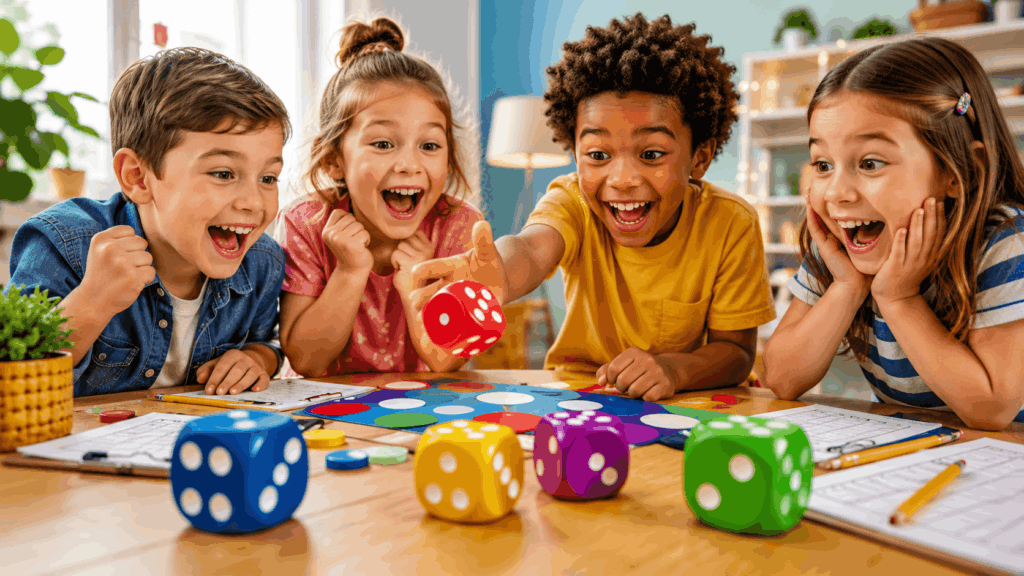



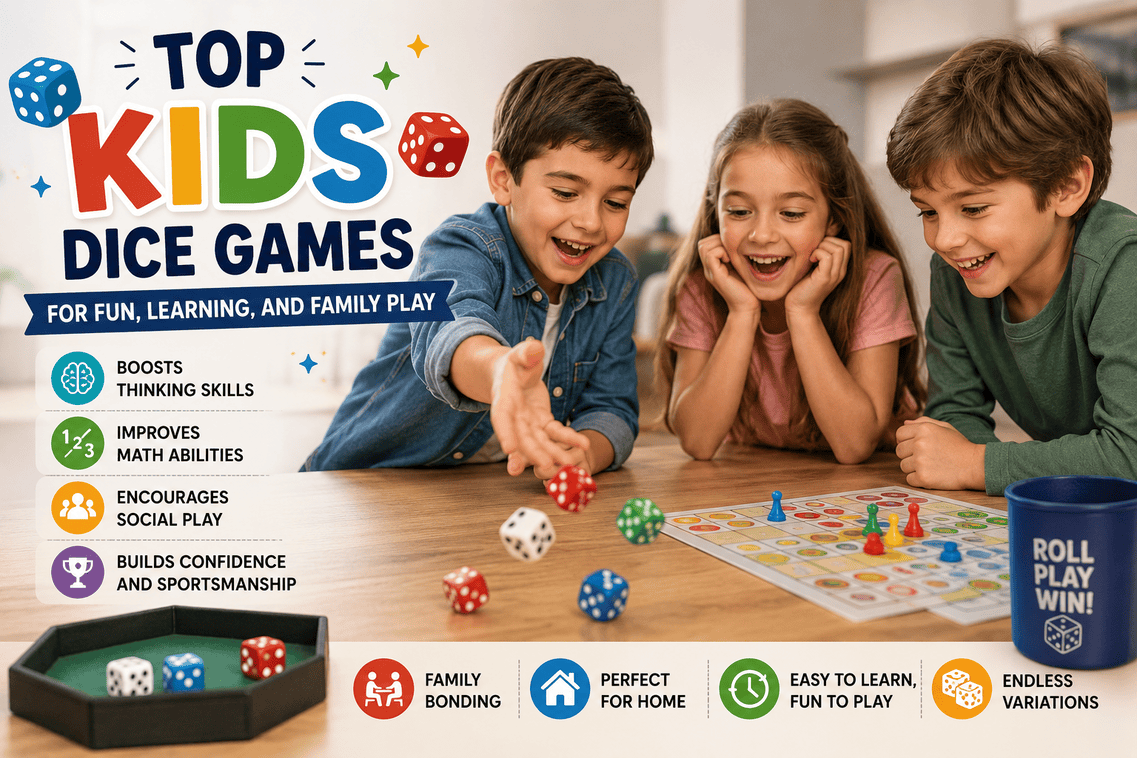
Why Kids Dice Games Make Family Time More Fun and Meaningful
One of the biggest reasons parents love kids dice games is that they are easy to start. There is no need for complex boards or advanced gaming skills. Even young children can understand the basic idea of rolling dice and counting points. As kids grow older, the games can become more strategic, giving them a fresh challenge every time they play.
They also help children develop useful skills, including:
- Counting and number recognition
- Basic addition and subtraction
- Turn-taking and patience
- Memory and focus
- Strategy and decision-making
- Confidence through participation
- Sportsmanship and fair play
The Gaming Appeal of Dice for Kids
From a gaming point of view, dice are exciting because every roll creates suspense. That surprise keeps the game active and engaging.
This unpredictable energy is what makes dice games different from many other activities. Kids stay alert because they know anything can happen.
Good kids dice games are not only about luck. These decisions help children think ahead and understand simple strategy. It adds a gaming layer that makes the experience more exciting.
1. Roll and Add
Each player rolls two dice and adds the numbers together to get their total score.The player with the highest total wins the round. You can play for five rounds, ten rounds, or continue until someone reaches a target score.
This game is great for younger kids because it improves addition skills in a fun way.
2. Race to 50
In this game, players take turns rolling one or two dice and adding the number to their total score. The first player to reach 50 wins. It sounds simple, but the excitement grows as players get closer to the winning score.
Race to 50 is a great choice for families because it is fast, easy, and competitive. It also teaches children how numbers build over time and helps them practice mental math.
3. Dice Match Challenge
Dice Match Challenge is a fun memory and matching game. Each player rolls three dice and tries to match a target pattern. For example, the target could be “two same numbers,” “all even numbers,” or “numbers in order.” Players earn points when they match the challenge.
This game is excellent for focus and pattern recognition. It also gives kids a sense of achievement when they roll the right combination.
4. Lucky Six
Lucky Six is all about rolling sixes. Each player rolls one die per turn. The first player to reach five points wins.
This is one of those kids dice games that works well when you want something quick and energetic.
5. Build the Number
Build the Number is a creative dice game where players roll dice and use the numbers to create the biggest possible number. For example, if a player rolls a 3 and a 5, they can make 35 or 53. The bigger number wins the round.

Dice House Games for Indoor Play
When families are spending time at home, dice house games can be a perfect way to keep kids entertained without relying on screens. These games are easy to play in the living room, bedroom, classroom, or dining area. They are also great during rainy days, holidays, or family weekends.
Parents can also make the game more exciting by creating themed versions, such as animal dice games, treasure hunt dice games, superhero dice challenges, or math adventure dice games.
Here are a few ways to make dice house games more exciting:
- Add small rewards like stickers or points
- Create a scoreboard to track winners
- Let kids invent their own rules
- Add storytelling, such as “roll to escape the dragon”
- Use timers for fast-paced rounds
- Play in teams for more cooperation
When kids help create the game, they feel more involved. This makes them more excited to play and encourages creativity.
Best Dice Games for Two Players
Sometimes kids want to play with just one sibling, friend, or parent. That is where dice games for two become very useful. Two-player dice games are easy to manage, quick to play, and often more focused because each player gets more turns.
A simple two-player game is “High Roll Battle.” Each player rolls two dice. The highest total wins the round. The first player to win ten rounds becomes the champion. Another good option is “Risk Roll,” where players can keep rolling to build points, but if they roll a one, they lose their points for that turn.
Dice games for two are great because they teach children healthy competition. They also give parents a chance to spend quality one-on-one time with their child. The games can be short, but the interaction is valuable.
How Dice Games Support Learning
Dice games are more than just entertainment. They can support early learning in a playful way. Children practice counting, comparing numbers, adding totals, and recognizing patterns. Older kids may also learn probability, planning, and risk management.
For example, when a child decides whether to roll again or stop, they are thinking about risk and reward. When they compare scores, they are using math. When they wait for their turn, they are practicing patience. These small lessons happen naturally during play.
That is why kids dice games are often a smart choice for parents and teachers. They combine fun with development, making them useful for both home and learning environments.
Tips for Making Kids Dice Games memorable & More Fun
To keep dice games interesting, it helps to add variety. Children may enjoy the same game for a while, but small changes can make it feel new again.
Try these ideas:
- Change the winning score
- Add bonus rounds
- Create team challenges
- Use different dice sizes or colors
- Add funny penalties or rewards
- Let kids name the game
- Create a final championship round
- Use a theme like pirates, space, animals, or racing
The goal is to keep the experience playful and flexible. Dice games are not about strict rules only. They are about fun, creativity, and connection.
Frequently Asked Questions.
Kids dice games are simple games designed for children using one or more dice. They often include rolling, counting, matching, scoring, and friendly competition. They are fun, easy to play, and helpful for learning basic math and decision-making skills.
Yes, dice games can be very good for children. They help improve counting, focus, patience, turn-taking, and problem-solving. They also encourage family interaction and social play.
Easy dice house games include Roll and Add, Race to 50, Lucky Six, High Roll Battle, and Dice Match Challenge. These games can be played indoors with very little setup.
Good dice games for two include High Roll Battle, Risk Roll, Build the Number, and Race to 50. These games are quick, simple, and perfect for siblings, friends, or a parent and child.
Yes, dice games can support math learning by helping kids practice counting, addition, subtraction, number comparison, and pattern recognition in a fun way.
Conclusion
Kids dice games are a wonderful way to mix fun, learning, and family bonding. They are simple to play, easy to customize, and exciting from a gaming point of view because every roll brings a new surprise. Whether children are playing quick dice house games at home or enjoying dice games for two with a sibling or parent, the experience can be both entertaining and educational.
In a time when many children spend hours on screens, dice games offer a hands-on activity that builds real interaction. They teach useful skills while creating laughter, suspense, and friendly competition. For families looking for an affordable and enjoyable way to make game time more meaningful, kids dice games are a perfect choice. All it takes is a few dice, a little imagination, and the excitement of the next roll.